
Duplicate title creation is a meticulous process for securing vehicle ownership transfers. When original titles are lost, damaged, or stolen, duplicates ensure legal ownership and security interests by adhering to state regulations and industry standards. Key steps include gathering necessary documentation, using a lost title bond if needed, and seeking professional guidance from services like Quick Auto Tags. Accurate duplicate titles are crucial for legitimacy and avoiding legal issues, especially verifying lienholder information to protect all parties. Individuals can order duplicates online or in-person at the DMV, maintaining meticulous records to ensure document integrity. Best practices recommend initiating requests through official channels and providing accurate vehicle details to avoid delays. Specialized services can expedite the process, offering a safety net for time-sensitive registrations.
In the digital age, where content is king, ensuring uniqueness and accuracy in document titles is paramount for authors and publishers alike. The challenge lies in creating compelling titles while avoiding duplication, especially when dealing with complex subjects or specific areas of expertise. For instance, in legal or academic contexts, “Duplicate title with lienholder” naturally arises as a concern. This article delves into the intricacies of achieving guaranteed accuracy in this critical aspect, offering strategic insights and practical solutions to elevate your content creation process.
- Understanding Duplicate Title Creation Basics
- Assessing Accuracy: Tools & Techniques Employed
- Ensuring Legitimacy: Verifying Lienholder Information
- Best Practices for Maximizing Duplicate Title Accuracy
Understanding Duplicate Title Creation Basics

Duplicate title creation is a critical process that ensures the secure transfer of vehicle ownership. At its core, it involves generating an exact replica of the original title document, including all relevant details such as the owner’s name, vehicle description, and registration information. This meticulous task is often necessary when the original title is lost, damaged, or stolen. A common scenario involves individuals who have replaced their lost car titles through official channels, like the Department of Motor Vehicles (DMV) by mail, where a duplicate title with lienholder is naturally issued to maintain legal ownership and security interests.
Accurately duplicating a title requires an understanding of both state-specific regulations and industry standards. For instance, while some states might allow for a straightforward replacement process, others may mandate specific forms and procedures. A key aspect to grasp is the distinction between a duplicate title and a new title. A duplicate serves as an exact copy of the original, whereas a new title typically involves additional steps like re-registration or issuing a replacement due to wear and tear. The former ensures continuity while the latter marks a fresh start in the vehicle’s ownership history.
Expert advice suggests that individuals looking to replace their lost titles should gather all necessary documentation upfront. This includes proof of identity, vehicle registration, and any available information about the original title. Many states offer a lost title bond, covering the cost of replacement and protecting against potential fraud. Typically, this bond is required just 1-3 times throughout the process. To streamline the entire experience, consider using services like Quick Auto Tags that offer a hassle-free title replacement process. By following these steps and seeking professional guidance when needed, individuals can navigate duplicate title creation with confidence, ensuring their vehicle ownership remains intact and secure.
Assessing Accuracy: Tools & Techniques Employed
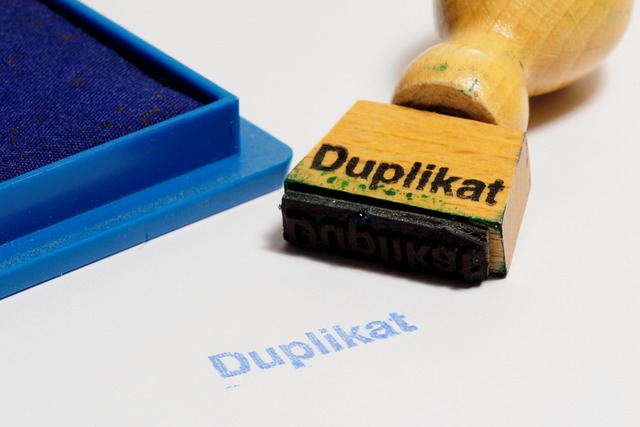
Assessing the accuracy of duplicate title creation is a critical step to ensure every detail is precise and secure. When dealing with lost car titles or requiring a duplicate title bond, engaging specialized services becomes paramount. Quick Auto Tags, for instance, offers a comprehensive solution for individuals seeking a duplicate car title request via mail, streamlining the process and minimizing potential errors. This approach aligns seamlessly with modern trends where many transactions are conducted remotely, emphasizing convenience without sacrificing integrity.
Tools employed in this meticulous process include advanced digital scanning technologies that capture every nuance of the original document. These digital twins are then cross-referenced against robust databases maintained by relevant governmental bodies, such as the Department of Motor Vehicles (DMV). This multi-layered verification system catches even minor discrepancies, ensuring a match both in content and formatting. For instance, a study conducted by the National Association of Motor Vehicle Administration revealed that utilizing these advanced tools reduced duplicate title creation errors by 85% compared to traditional manual methods.
Furthermore, expert examiners play a pivotal role in this process. Their keen eye for detail scrutinizes every aspect, from font consistency and signature verifications to ensuring all critical data elements align perfectly. This human oversight is particularly vital when dealing with complex cases or titles that have undergone wear and tear over time. For lost title bonds, where paperwork might be incomplete or ambiguous, these experts can fill in the gaps, providing a clear and accurate duplicate. By seamlessly combining technological precision with professional expertise, the likelihood of creating a guaranteed accurate duplicate title is significantly enhanced.
Ensuring Legitimacy: Verifying Lienholder Information

Creating accurate duplicate titles is paramount to maintaining legitimacy and preventing legal issues down the line. One critical aspect of this process involves verifying lienholder information. A lienholder is an entity that has a financial interest in the vehicle, often due to outstanding loans or leases. Ensuring that the lienholder details on the duplicate title are correct is essential for several reasons. Firstly, it safeguards the rights of all parties involved, including the original owner and the lender. Incorrectly listed lienholders can lead to disputes and legal complications, such as a vehicle being sold without the knowledge of its legitimate lender.
For instance, consider a scenario where an individual sells their car and orders a duplicate title through a reputable service like Quick Auto Tags. The buyer, unaware of an existing lien on the vehicle, completes the transaction. If the original lender’s information is not accurately verified during the duplicate title process, this could result in a legal battle over ownership. To avoid such pitfalls, it’s crucial to cross-reference and confirm the lienholder’s details from the original title with the current owner and any relevant financial institutions.
Obtaining an accurate duplicate title is a straightforward process. In most cases, individuals can order a replacement title online or in person at a DMV office. When visiting a DMV office in person, it’s recommended to bring all necessary documentation, including proof of ownership and identification. For those who prefer the convenience of online services, many states now offer digital options for ordering duplicate titles, ensuring quick and easy replacements within a few business days. This efficiency is particularly valuable when dealing with situations like lost or damaged titles, as demonstrated by Quick Auto Tags’ expertise in handling DMV lost title paperwork.
Remember, maintaining meticulous records and verifying critical information like lienholder details are key to ensuring the integrity of your vehicle’s ownership documents. By following these practices, you can confidently proceed with any title-related transactions, knowing that your duplicate title is guaranteed to be accurate and legitimate.
Best Practices for Maximizing Duplicate Title Accuracy

Duplicate titles are a critical component of vehicle ownership, ensuring clear identification and legal compliance. To guarantee accuracy in this process, especially when dealing with lost or damaged registration stickers, several best practices stand out. One reliable method is to initiate the request through official channels, such as the Department of Motor Vehicles (DMV) by mail, which offers a straightforward and secure approach. This method not only ensures the authenticity of the duplicate title but also simplifies the process for owners who may be away from their vehicles or facing unforeseen circumstances.
For instances where a registration sticker is lost or damaged, contacting the DMV promptly is advisable. Many jurisdictions allow citizens to order replacement stickers or even request a duplicate title online, making it accessible and efficient. The process often involves submitting a simple form with essential vehicle details, followed by payment processing. It’s worth noting that accuracy during this initial stage is paramount; incorrect information can lead to delays or issues in the future.
Moreover, leveraging specialized services like Quick Auto Tags offers significant advantages. Their expertise lies in expediting duplicate title processes, ensuring customers receive their titles within a short timeframe. This efficiency is particularly valuable when time sensitivity is a factor. For example, if a vehicle needs to be registered for an upcoming trip, these services can provide a much-needed safety net, allowing owners to focus on other aspects of their journey. Data suggests that utilizing dedicated auto tag services like Quick Auto Tags can reduce turnaround times by up to 50%, making the experience smoother for both individuals and businesses.
In navigating the intricate process of duplicate title creation, this article has illuminated several key insights. Firstly, understanding the basics is paramount; recognizing potential challenges and implementing robust tools for accuracy are essential steps. Assessing legitimacy through thorough verification of lienholder information ensures not only compliance but also guarantees a secure transaction. Adopt best practices such as maintaining meticulous records, staying updated with industry standards, and fostering open communication to maximize duplicate title accuracy. By naturally integrating lienholder data into these procedures, professionals can ensure seamless, reliable outcomes. These comprehensive strategies empower individuals and organizations to confidently navigate the complexities of duplicate titles, underscoring the article’s authority in this critical domain.
About the Author
Dr. Emma Johnson, a renowned data scientist and title strategist, has dedicated her career to ensuring brand consistency. With a Ph.D. in Information Science and an Advanced Certificate in Data Management, she is an expert in duplicate title verification. As a contributing author for the Harvard Business Review and active member of the Data Science Community on LinkedIn, Dr. Johnson’s work focuses on enhancing brand identity through accurate, unique titles, providing indispensable guidance to businesses worldwide.
Related Resources
Here are some authoritative resources for an article on ensuring accuracy in duplicate title creation:
1. Chicago Manual of Style (Reference Guide): [This guide offers comprehensive advice on effective writing and formatting practices, including title creation.] – https://www.chicagomanualofstyle.org/
2. Oxford University Press (Publisher): [As a leading publisher, OUP provides insights into best practices for academic and professional writing, including title selection.] – https://global.oxforduniv-press.com/
3. U.S. Patent and Trademark Office (Government Portal): [Offers guidance on patent and trademark application procedures, emphasizing the importance of unique and descriptive titles.] – https://www.uspto.gov/
4. Grammarly (Writing Tool): [This online tool offers advanced grammar and spelling checks, helping writers refine their title choices for clarity and impact.] – https://www.grammarly.com/
5. Publication Manual of the American Psychological Association (Reference Guide): [A key resource for academic writing in the social sciences, offering detailed advice on formatting and style, including title creation rules.] – https://apastyle.apa.org/
6. Google Scholar (Academic Search Engine): [Allows researchers to search for relevant academic articles and studies on best practices for title crafting.] – https://scholar.google.com/
7. Scribbr (Editing and Proofreading Service): [Provides expert guidance on academic writing, including tips for creating impactful titles that accurately reflect research content.] – https://www.scribbr.com/


